
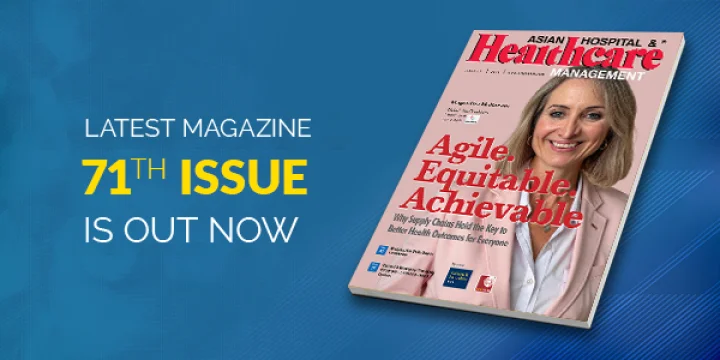
Agile. Equitable. Achievable: Why Supply Chains Hold the Key to Better Health Outcomes for Everyone
The article featured on the cover of Asian Hospital & Healthcare Management (Issue 71) is titled “Agile. Equitable. Achievable: Why Supply Chains Hold the Key to Better Health Outcomes for Everyone.”
Authored by Magrietha Mallinson, Global Vice President of Healthcare at DP World, the piece provides a comprehensive analysis of the critical role logistics play in global health. Below is a detailed summary formatted in a standard article structure.
Introduction
For decades, healthcare supply chains were designed with a primary focus on efficiency and cost-cutting. However, recent global disruptions—ranging from the COVID-19 pandemic to geopolitical instability and climate-related disasters—have exposed the fragility of this “just-in-time” model. Magrietha Mallinson argues that for healthcare to be truly effective, the industry must transition toward a model that is agile, equitable, and achievable. The core premise is that a hospital’s ability to save lives is directly tied to the reliability and transparency of the logistics network that supports it.
The Shift from Efficiency to Agility
Mallinson posits that “agility” is no longer an optional luxury but a fundamental requirement. Traditional supply chains often collapsed under the weight of sudden demand surges or transport blockades. An agile supply chain, by contrast, is built on resilience. This involves diversifying sourcing, localized manufacturing, and flexible logistics partnerships that can pivot during crises. By prioritizing agility over mere cost-saving, healthcare providers can ensure that life-saving medications and equipment are available exactly when and where they are needed, regardless of external pressures.
Bridging the Equity Gap
A significant portion of the article focuses on “Equity.” Mallinson highlights a sobering reality: while medical breakthroughs occur at a rapid pace, the distribution of these innovations remains profoundly unequal. In many developing regions, the “last mile” of delivery remains the greatest hurdle.
Logistics barriers, such as the lack of cold-chain infrastructure for temperature-sensitive vaccines or lengthy customs delays, often mean that patients in remote areas receive substandard care or no care at all. Mallinson argues that achieving health equity requires a global commitment to building robust infrastructure that treats logistics as a public good, ensuring that a patient’s geography does not determine their survival.
The Role of Technology and Sustainability
To make these goals “Achievable,” the article points to two major drivers: digitalization and sustainability.
- Digital Transparency: Real-time tracking and AI-driven analytics allow for better inventory management, reducing waste—particularly in high-value pharmaceuticals and vaccines.
- Sustainable Logistics: As healthcare systems strive to reduce their carbon footprint, supply chains must also evolve. This includes optimizing routes to reduce emissions and utilizing eco-friendly packaging, proving that better health outcomes for patients do not have to come at the expense of the planet’s health.
Conclusion
Mallinson concludes that the supply chain is the “unsung hero” of the healthcare industry. By moving away from fragmented, opaque drhrahman.com systems and toward integrated, agile, and technology-driven networks, the global community can ensure that healthcare is not just a privilege for some, but a reality for all. The key to better health outcomes, she asserts, is not found only in the laboratory or the operating theater, but in the very pipes and vessels that move medicine across the world.