
The Living Monuments: Exploring the Majesty and Ecology of Ancient Oaks
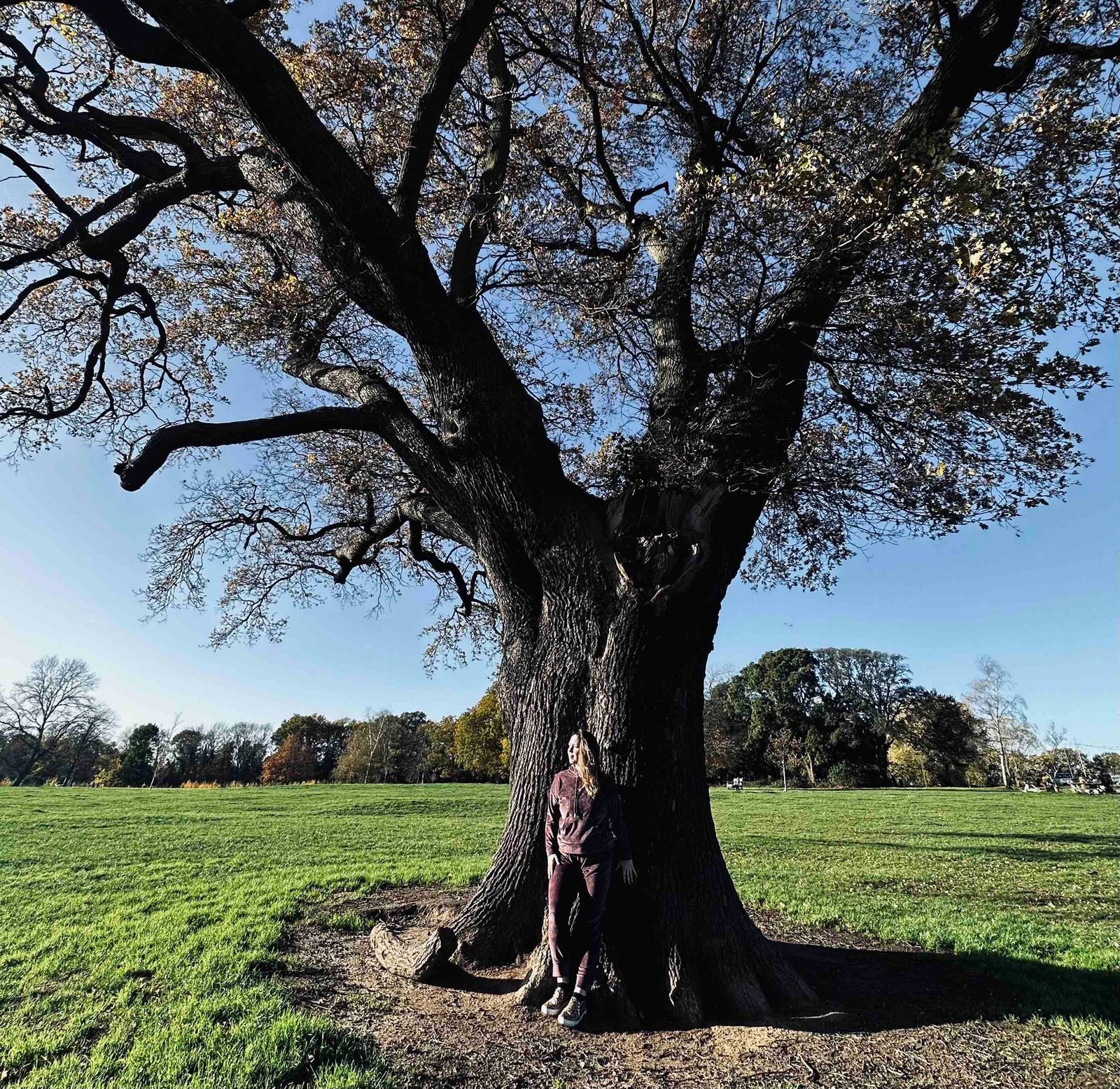
Ancient oak trees stand as monumental witnesses to history, grounding human narratives in the enduring rhythms of the natural world. In a striking image that bridges personal wellness with ecological grandeur, Nicola, the founder of ALMA Wellness UK, is pictured at the base of a massive Common oak (Quercus robur). This species, often called the English oak, is a cultural icon of strength and a cornerstone of forest ecosystems across Europe.
Biological Foundations of the English Oak
The Quercus robur is characterized by its wide trunk and deeply grooved, dark brown bark that fissures with age. These trees can grow up to 40 meters tall, though they often become squatter and more stable as they enter their “ancient” phase—a stage that begins after roughly 400 years.
| Feature | Description |
|---|---|
| Leaves | Dark green with 3 to 6 rounded lobes and exceptionally short stalks. |
| Seeds | Acorns on long stalks (peduncles), typically produced after the tree is 50 years old. |
| Lifespan | Can live for over 1,000 years. |
| Habitat | Prefers fertile, moist soils in lowlands. |
Ecological Significance: A Biodiversity Hub
A single ancient oak is more than an individual plant; it is a complex living system. These trees support more life than any other native tree species in the UK, hosting an estimated 2,300 wildlife species.
- Microhabitats: As oaks age, they develop hollow trunks, decay holes, and split bark. These features are not signs of failure but essential “microhabitats” for bats, birds, and specialized fungi.
- Invertebrate Support: The deadwood found in ancient oaks is critical for saproxylic invertebrates—insects that depend on decaying wood for their lifecycle.
- Oxygen Production: A single 400-year-old oak is estimated to produce approximately 234,000 liters of oxygen annually.
Cultural and Historical Heritage
In the UK, ancient oaks are viewed as “living links” to the past. Some specimens predate Stonehenge in historical significance, having stood through centuries of social and environmental change. Famous examples include the Major Oak in Sherwood Forest and the Bowthorpe Oak, both believed to be roughly 1,000 years old.
Richmond Park in London is a world-renowned site for these “gnarly old time-travellers,” containing approximately 1,300 veteran trees. One of its most celebrated residents is the Royal Oak, a 750-year-old specimen with a hollowed trunk that has historically served as a playground for children before being fenced for protection.
Conservation Challenges
Despite their robust nature, English oaks face modern threats. Climate change has made them more vulnerable to drought and almawellnesstherapy.com high temperatures. Pests like the oak processionary moth can damage foliage and weaken the tree’s resistance to other diseases. Conservationists today work to protect these giants through inventory tagging and the creation of “Root Protection Zones” to prevent soil compaction from high visitor traffic.
Would you like to find ancient tree trails near your current location or more information on ALMA Wellness’s holistic therapy approaches?