The High-Tech Renaissance of China’s Holistic Beauty Industry
The landscape of the Chinese beauty industry is undergoing a radical metamorphosis, transcending the traditional boundaries of grooming to become a sophisticated intersection of ancient wisdom and futuristic innovation. By 2026, the concept of a “salon” in Tier-1 cities like Shanghai, Beijing, and Shenzhen has been completely redefined. No longer restricted to the aesthetic trifecta of hair, nails, and skin, these spaces have evolved into comprehensive sanctuaries for holistic health. This shift reflects a profound change in the Chinese consumer psyche, where the relentless pace of urban life has birthed a desperate craving for “Internal Harmony”—the seamless balance between outer radiance and inner tranquility.
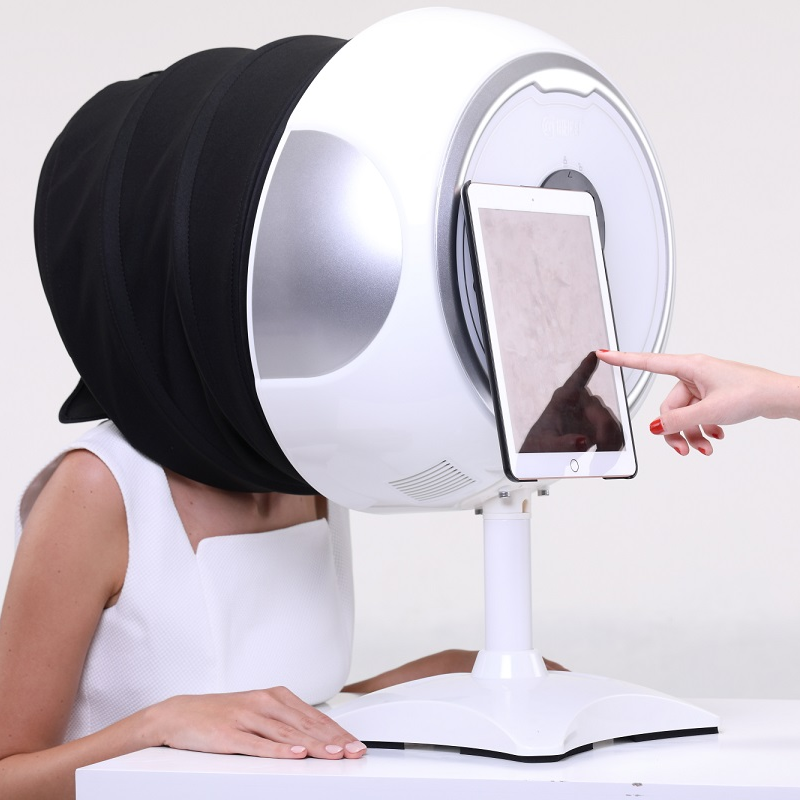
Central to this evolution is the seamless integration of hyper-personalized technology. Upon entering a modern Chinese salon, a client’s journey begins not with a consultation, but with a digital diagnostic. Advanced AI-driven mirrors and spectroscopic sensors analyze skin elasticity, scalp microbiome health, and even stress markers through facial blood flow patterns. This data is synthesized instantly to curate a bespoke treatment plan, often involving molecularly-tailored serums mixed on-site by robotic dispensaries. Whether it is a hair treatment calibrated to the specific humidity of the client’s neighborhood or a facial regimen adjusted for blue-light exposure, the precision is absolute.
However, the true soul of this industry lies in its “New Traditionalism.” China has masterfully reclaimed its heritage by digitizing Traditional Chinese Medicine (TCM). Modern salons now offer scalp spas that combine micro-current stimulation with ancient herbal decoctions, targeting meridian
salon duva points to alleviate mental fatigue. We see the rise of “Smart Guasha,” where thermal energy tools mimic the manual dexterity of a master practitioner while providing infrared therapy to stimulate collagen at deeper layers. This hybrid approach ensures that while the methods are high-tech, the philosophy remains rooted in the holistic flow of
Qi.
The architectural essence of these spaces has also shifted. Designers are moving away from the clinical, bright lights of the past toward “Biophilic Sanctuaries.” These environments utilize soundscapes tuned to specific frequencies, aromatherapy diffused based on the client’s heart rate, and lighting that syncs with the circadian rhythm. The goal is to induce a state of “Deep Rest.” In a culture where burnout is a constant threat, the salon has become the primary laboratory for stress management.
Ultimately, the future of beauty in China is a testament to a “Total Wellness” philosophy. It recognizes that a glowing complexion is a byproduct of a calm mind and a balanced body. As we move through 2026, the industry stands as a global blueprint for how technology should not replace the human touch, but rather enhance it to heal the whole person. In this new era, looking good is merely the starting point; feeling centered is the ultimate luxury.